The next few weeks of the war in Gaza may be especially important because the Biden administration is pressuring Israel to shift to a less intensive approach by late January. In today’s newsletter, I’ll explain what both Israel and Hamas hope to accomplish between now and then.
Hamas’s strategy
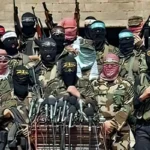
The primary short-term goal of Hamas’s leaders is survival.
More than half of Hamas’s battalions may have already stopped fighting, having surrendered, fled or been killed. But Hamas’s top leaders, including Yahya Sinwar and Mohammed Deif, have apparently survived, and the group is still strong enough to fight Israeli troops in much of Gaza. Hamas hopes the same will be true several weeks from now.
To make that happen, it is focusing on two main objectives:
1. Kill or wound more Israeli soldiers — and weaken Israeli support for the war.
Before Oct. 7, Israeli fears of troop casualties and kidnappings was one reason that Israel’s leaders never ordered a full invasion of Gaza to fight Hamas. “Oct. 7 changed everything,” as my colleague Ronen Bergman, who covers Israeli intelligence and defense, said.
The brutality of Hamas’s Oct. 7 attacks made the Israeli public much more willing to tolerate military casualties. But that willingness may not be permanent. In one battle last week, Hamas killed nine Israeli soldiers in Shajaiye, a neighborhood in Gaza City. Israeli forces mistakenly killed three hostages in the same neighborhood on Friday, causing some Israelis to question the current strategy.
“The continued fighting in the current format will mean a steady trickle of news about soldiers dying,” Amos Harel, a correspondent for Haaretz, the liberal Israeli newspaper, wrote this week. “Broad public support for a ground incursion, which was strong in the aftermath of the Hamas massacre, is now being gradually mixed with concern and skepticism.”
2. Ensure that civilian deaths in Gaza increase international pressure on Israel.
As Ronen told me, “Hamas’s goal is to survive in the tunnels while international pressure, because of civilian casualties, forces Israel to evacuate.” If Hamas’s leaders can survive several more weeks and Israel then accepts a cease-fire, the leaders can declare victory, he added.
Hamas has long hidden its fighters and weapons in and under populated civilian areas, such as hospitals and mosques. It does so partly to force Israel to make a gruesome calculation: To fight Hamas, Israel often must also harm civilians.
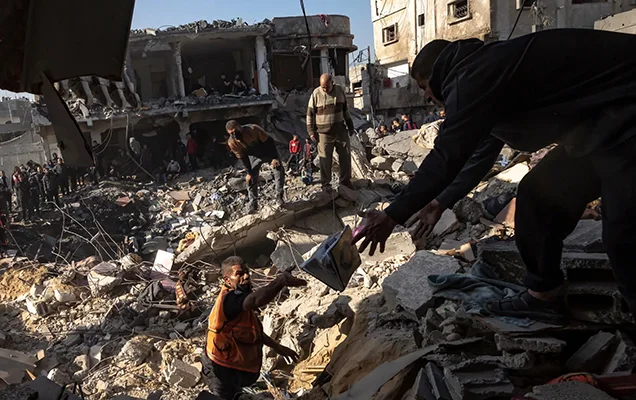
Since Oct. 7, Israel’s leaders have decided to accept that trade-off, primarily by attacking Hamas with powerful airstrikes that have killed thousands of civilian Gazans. International criticism of this approach has been intense. Top officials in the U.S., Israel’s most important ally, have said that the war strategy needs to change soon and that Israel needs to do more to avoid civilian deaths.
Hamas’s leaders hope to survive long enough for the political pressure to force Israel to pull back. They also would like to win the release of more Palestinian prisoners.

Israel’s strategy
Israel’s two main military goals are, in many ways, the mirror image of Hamas’s:
1. Finish taking control of Hamas’s remaining strongholds in northern Gaza — and assert more control over the south.
Hamas forces remain active enough in the tunnels below parts of northern Gaza — including Shajaiye — that they can launch attacks like the one that killed nine Israelis last week. If Israel can complete its control over the north, it can devote more attention to the south, especially the area around Khan Younis, the largest city in southern Gaza, which Israel says has become Hamas’s headquarters.

Israeli officials think that many of Hamas’s leaders, including Sinwar and Deif, are operating from tunnels below Khan Younis. (Both Sinwar and Deif grew up in Khan Younis refugee camp.) The Israelis think many remaining hostages are in the area, too.
“Israel believes that if the fighting forces of Hamas in Khan Younis stop fighting — are captured or are killed — it more or less ends the battle on the ground,” Ronen said. Hamas then would be without its organizational structure, and the remaining fighters might release hostages in exchange for their own survival. But Israel remains far from achieving this goal.
“Israel has set a very high bar for this conflict: destroying Hamas,” as Michael Eisenstadt of the Washington Institute for Near East Policy told me.
2. Remain flexible and keep the U.S. from imposing a strict time limit on this phase of the war.
The last few weeks of the war don’t seem to have gone as well as Israeli leaders hoped. “The time frame for Israel defeating Hamas militarily is longer than they thought,” Ronen said. These struggles are one reason that Israeli officials now seem more interested in another exchange of hostages and prisoners.
It is possible that Israel will not be able to destroy Hamas and will eventually pull back from Gaza without having done so. For now, though, Israeli leaders remain committed to the goal. One key to achieving it is likely to be continued U.S. support for aggressive military action, even if Israel also tries harder to reduce civilian casualties.
U.S. officials have spoken only in general terms about the changes they want to see to Israel’s military strategy, rather than making specific demands, like the withdrawal of troops. And uncertainty is important to Israel’s military plan.
If Hamas’s leaders know that Israel’s operations are winding down, they may be able to hunker down for a few more weeks. If Hamas is instead facing an unpredictable, extended war, it may need to take risks — such as bringing more supplies into the tunnels or moving from one place to another — that could expose its leaders to danger.

Dec. 20, 2023Updated 8:21 a.m. ET